 Call Us — +1 (929) 201-3767
 info@childrenpublishers.com

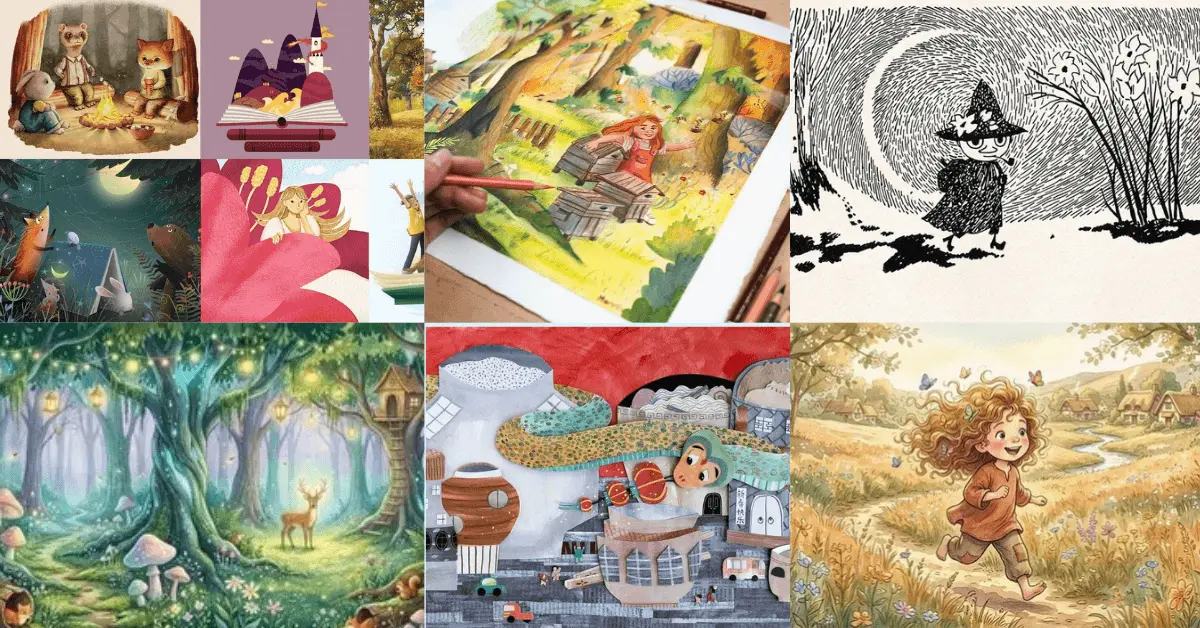
10 Creative Children’s Book Illustration Styles (With Examples)
Picking the right illustration style is one of the first real decisions a children’s author makes, and it shapes far more than the look of the page. It sets the tone for how the story reads, who it appeals to, and how a young reader connects with the characters inside it. A bright cartoon scene lands very differently than a quiet watercolor spread, even if the words on the page are the same.
This post walks through 10 children’s book illustration styles, with real examples of how each one looks and works in practice. Whether you’re writing for toddlers or middle-grade readers, you’ll find a style suited to your story, along with a clear sense of when to use it and why it fits.
Let’s Explore Top 10 Illustration Styles For Children’s Books
1) Cartoon
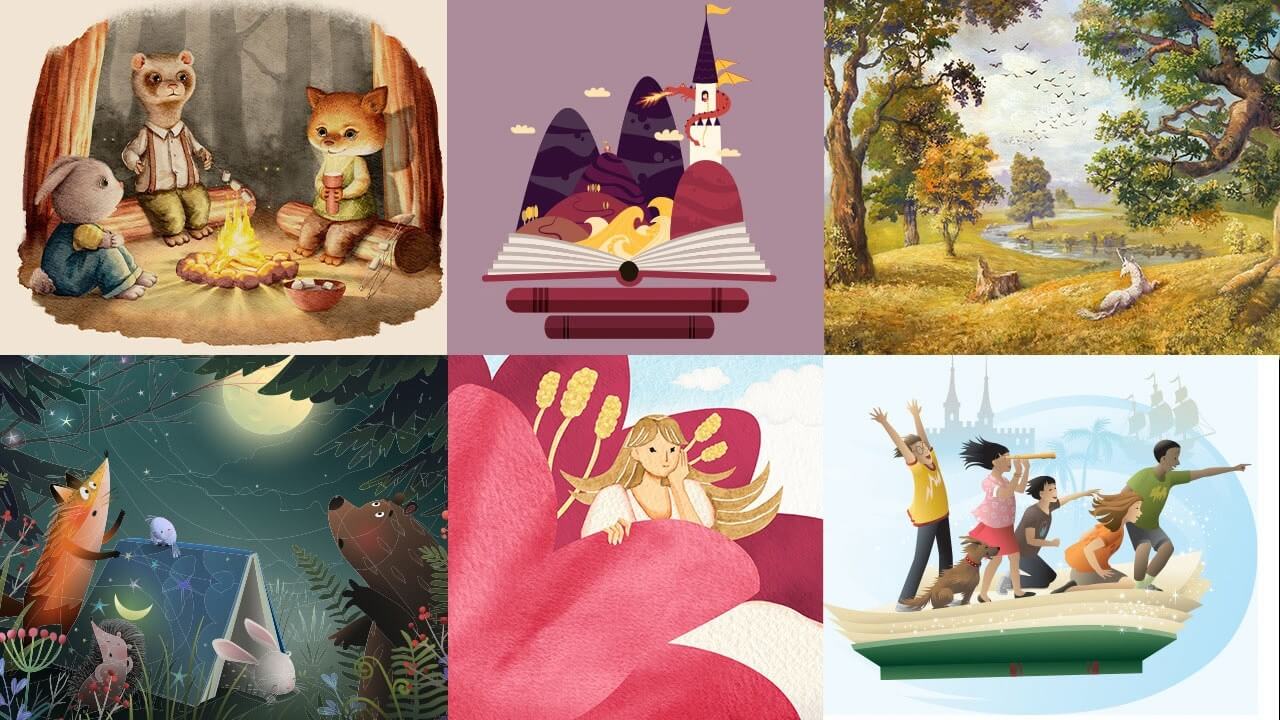
Cartoon illustrations use bold outlines, exaggerated expressions, and bright, saturated colors. Characters often have rounded features and playful poses that make them easy to read at a glance. This style works well across a wide age range, from picture books for toddlers to graphic novels for older kids, because the visual energy carries the story even before a child reads a single word. It suits adventurous, silly, or high-energy stories best. Among the children’s book illustration styles authors consider first, cartoon tends to be the most flexible, since it can stretch from gentle humor to full slapstick depending on how far the artist pushes the exaggeration.
2) Watercolor
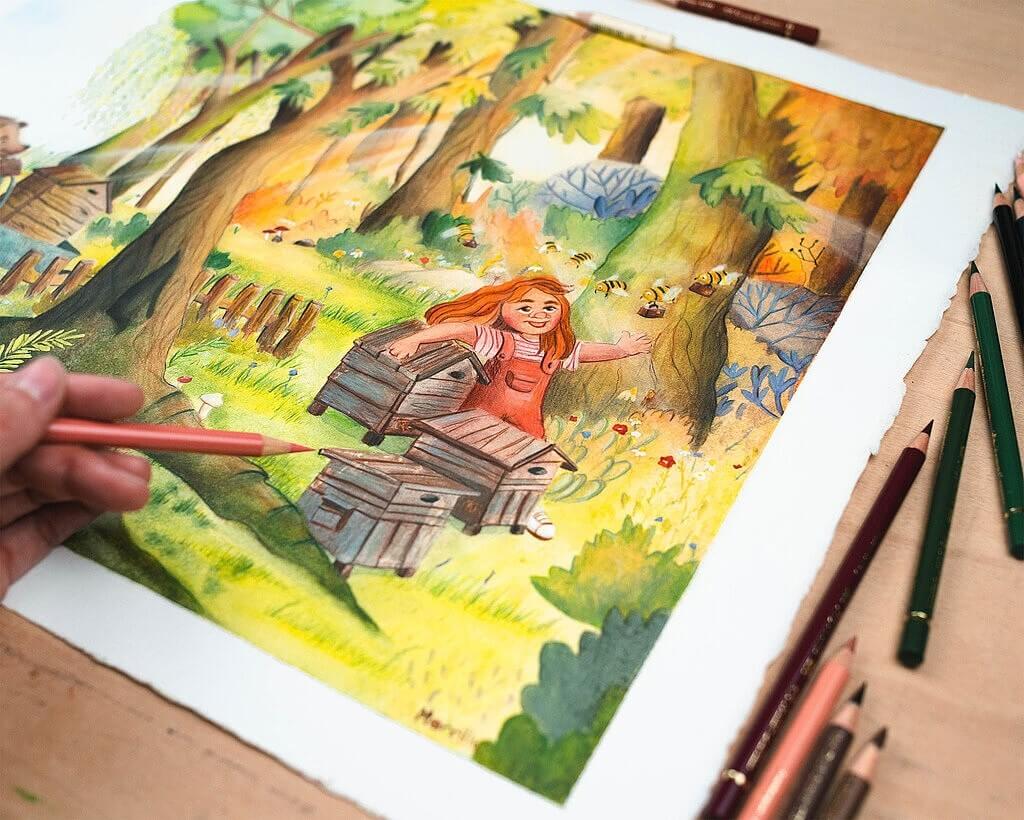
Watercolor illustrations lean on soft gradients, muted tones, and visible brushwork that gives each page a handmade feel. Colors blend into one another rather than sitting in flat blocks, which creates a gentler, more reflective mood on the page. This makes it a strong fit for stories about family, friendship, or quiet emotional moments, and it tends to work best for younger readers, roughly ages four to seven. Many watercolor children’s book illustration styles also use negative space well, letting a single detail like a sparrow or a teacup carry the whole scene without crowding it.
3) Whimsical and Otherworldly
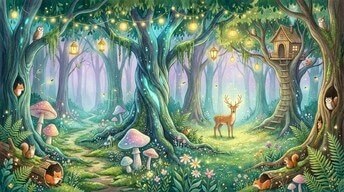
This style builds imaginative, dreamlike scenes using pastel colors, soft lighting, and settings that don’t quite follow real-world rules. Proportions bend, colors glow a little more than they should, and everyday objects often take on a magical quality. It’s suited to fantasy stories, bedtime books, and anything meant to spark a child’s imagination. Because the visuals ask a bit more from the reader’s eye, this book style tends to land best with younger children who are still forming their sense of how the world works and enjoy having it stretched.
4) Realistic and Semi-Realistic
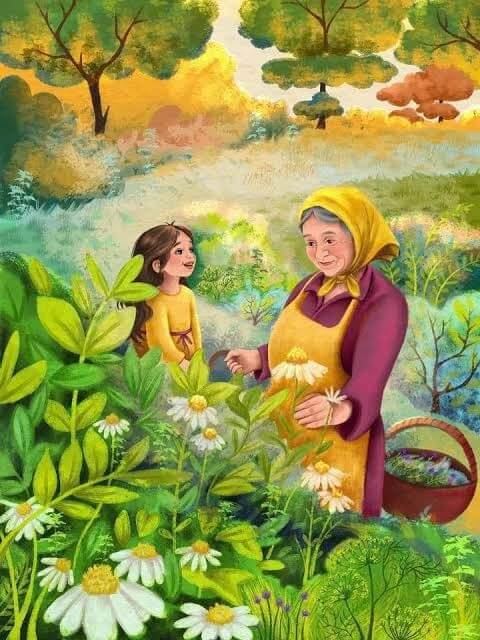
Realistic illustrations aim for true-to-life proportions, natural lighting, and careful shading that mirrors how people and objects actually look. Semi-realistic versions soften a few details while keeping the overall image grounded. This children’s book illustration style works well for nonfiction, historical stories, or books tackling a serious topic like grief, illness, or bullying, since the visuals need to hold emotional weight without exaggeration. It also gives illustrators room to show subtle expressions, which matters when a story depends on a character’s face doing quiet emotional work.
5) Pen and Ink
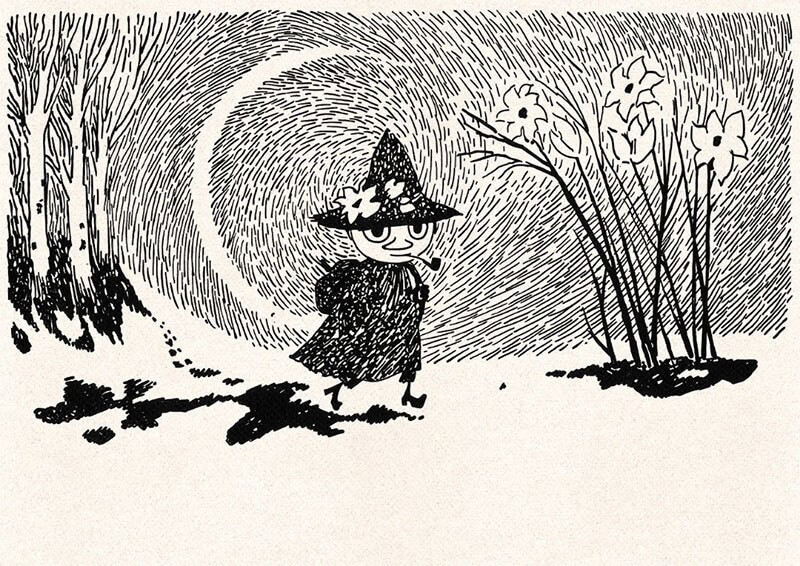
Pen and ink illustrations rely on black and white linework, using techniques like cross-hatching and stippling to build texture and shadow without any color. The result feels intentional and a little old-fashioned, which suits chapter books and stories with a classic or literary tone. A few things make this style stand out:
- Strong contrast between light and dark areas
- Fine detail that rewards a second look
- A quieter, more grown-up feel compared to bright cartoon art
It’s a good option for authors who want their book to feel timeless rather than trend-driven. If this level of detail feels outside your own skill set, working with one of the best book illustration services can connect you with an artist experienced in this technique.
6) Flat and Graphic
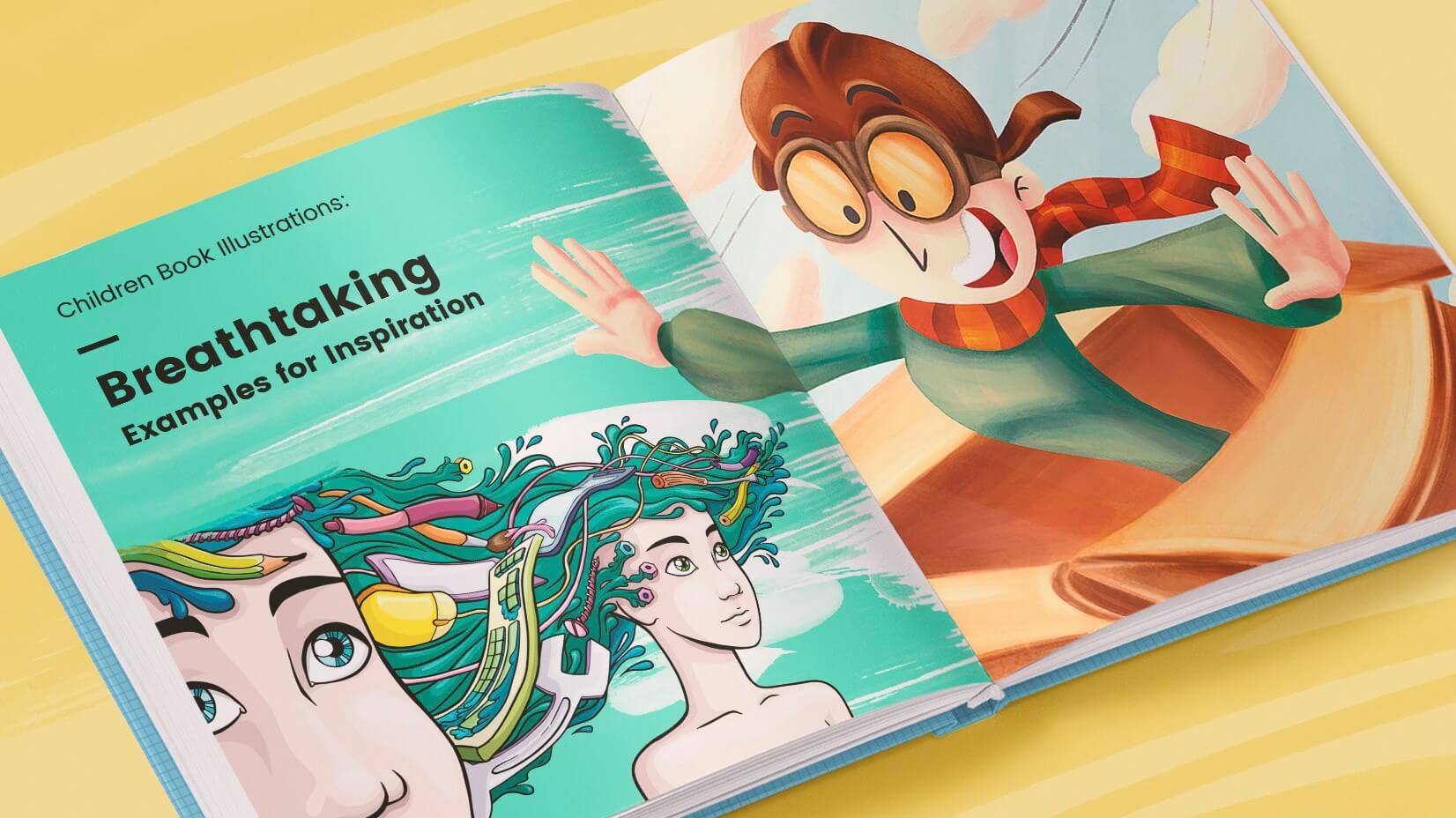
Flat illustrations use solid colors, clean shapes, and almost no shading or gradient. The visual style borrows from mid-century design and modern vector art, keeping every scene easy to take in quickly. This works especially well for very young readers or fast-paced picture books, since there’s nothing visually competing for attention. Many childrens book art styles in this category also translate well to animation, which is part of why children book publishers often lean on flat design for board books and early readers who are still building focus and attention span.
7) Stylized and Decorative
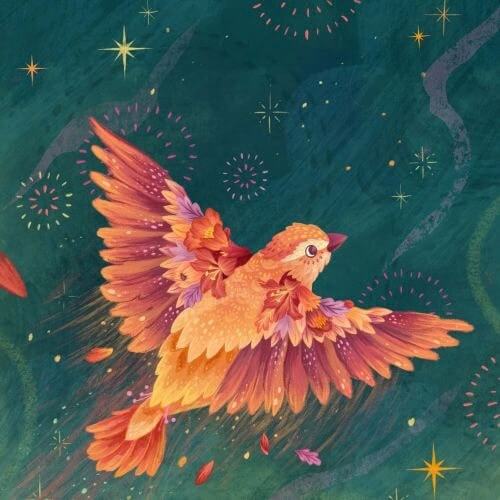
This style leans into pattern, texture, and detail, often layering elements like foliage, fabric, or ornamental borders into a single scene. It suits conceptual or mythical stories where the world itself is part of the story’s appeal. Because there’s more visual information packed into each page, this tends to work best for slightly older readers, around ages six to nine, who can sit with an image a little longer. Art styles for children’s books in this category often reward a second or third read, since new details tend to surface each time.
8) Moody and Muted
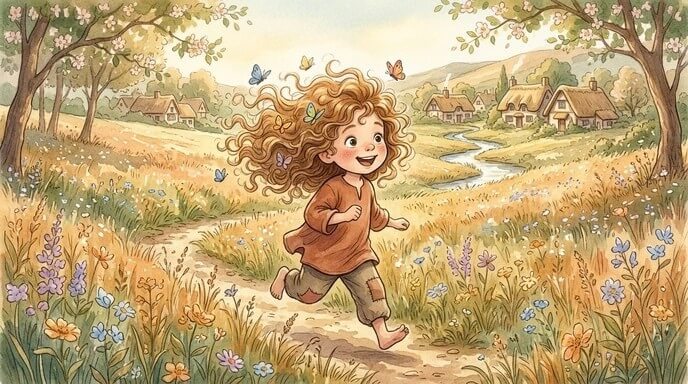
Moody illustrations use desaturated colors, soft shadows, and hazy lighting to build atmosphere rather than energy. Nothing here is loud. The palette stays deliberately restrained, which suits stories dealing with mystery, uncertainty, or quieter emotional stakes. This childrens book illustration style tends to work better for older readers who can sit with nuance, since younger kids often respond more to bright, clear visual cues. It’s a strong match for adventure stories with a slower pace or books that don’t wrap things up too neatly.
9) Collage and Mixed-Media
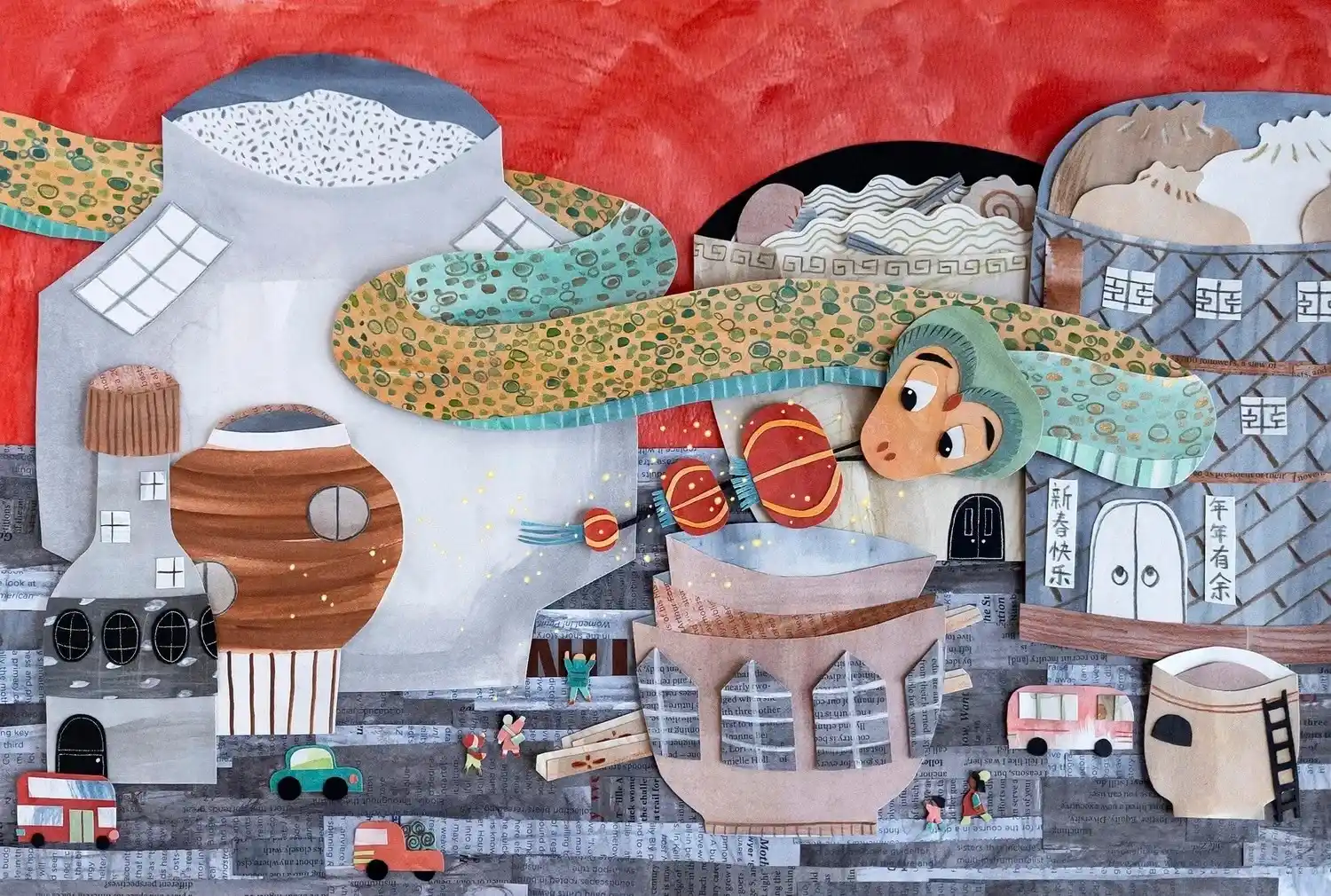
Collage illustrations combine cut paper, painted textures, photography, and other physical or digital materials into a single layered image. The seams often stay visible on purpose, giving the page a handmade, tactile quality that flat digital art can’t quite replicate. This works well for playful, textured stories or nonfiction books that benefit from a scrapbook feel. It’s one of the more distinct illustrations book formats out there, since no two collage artists build a scene the same way, even when working from a similar brief.
10) Digital Painterly
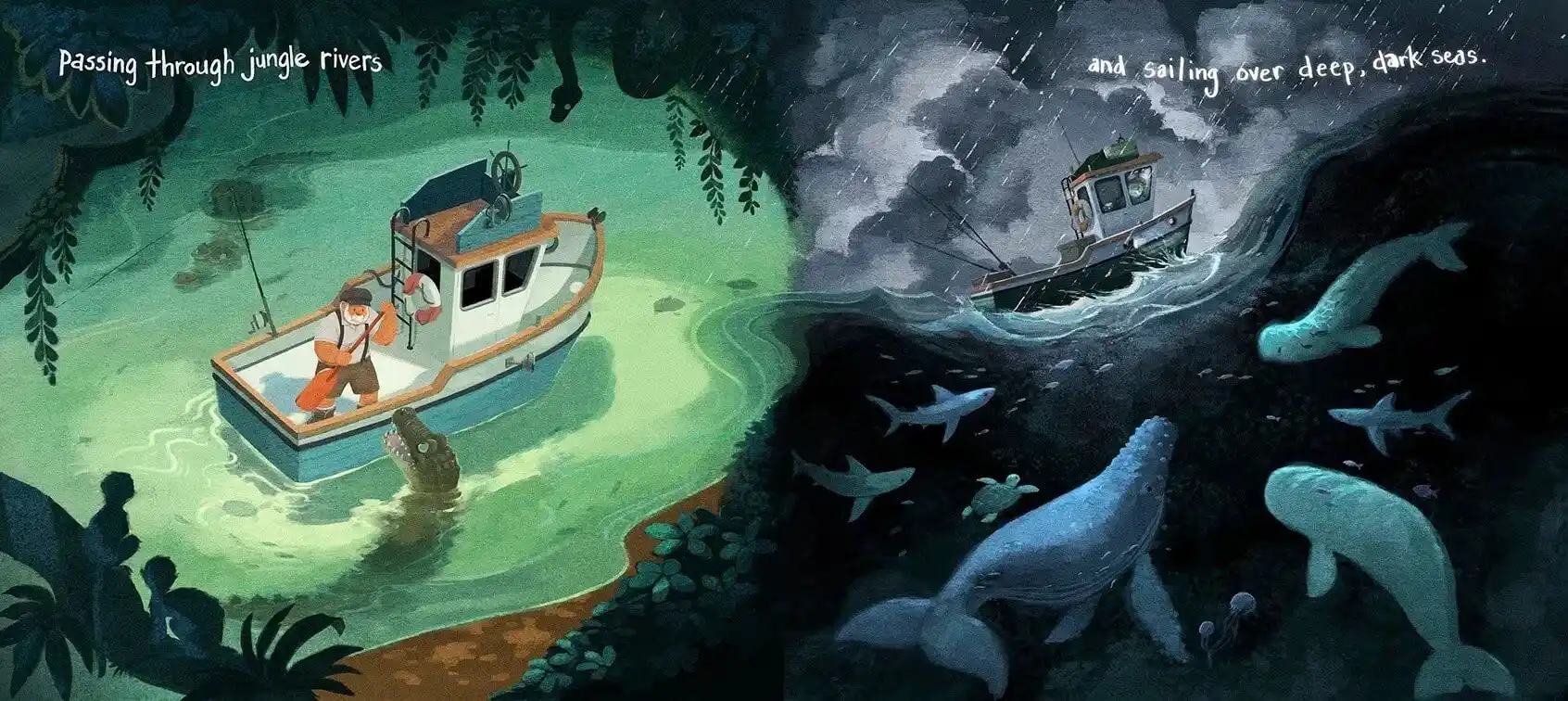
Digital painterly illustration blends traditional painting techniques with digital tools, giving artists the texture of brushwork with the flexibility of layers and easy revisions. A few things set it apart from the other styles above:
- Rich color blending that mimics oil or gouache paint
- Fine control over lighting and atmosphere
- Faster production timelines than fully traditional media
It’s one of the more adaptable book styles working illustrators rely on today, holding up well across picture books and graphic novel panels alike. It suits stories that need both emotional depth and visual polish, which is part of why it has become such a common choice among working illustrators.
FAQs
1- What are the different styles of illustrations for children’s books?
Children’s book illustration styles range from bright, exaggerated cartoon art to soft watercolor washes, realistic portraiture, pen and ink linework, flat graphic design, and mixed-media collage. Each style suits a different age group and story tone, so the right choice depends on what the book needs to convey.
2- What makes a good children’s book illustration?
A strong illustration shows clear character emotion, matches the story’s tone, and adds detail a child can keep discovering on repeat reads. The style should also fit the target age group, since toddlers respond to bold simple shapes while older readers can handle more complex scenes.
3- How do I find the right illustration style for my book?
Start with your story’s tone and target age group. A lighthearted, silly story suits cartoon or flat graphic art, while an emotional or serious topic often works better with watercolor or realistic childrens book illustration style. Many publishers also have style preferences based on their catalog, so it’s worth checking submission guidelines before finalizing your approach.
4- What type of children’s books sell the most?
Picture books and early-reader board books remain the strongest sellers, especially titles built around bedtime routines, first experiences, and everyday feelings. These categories stay in steady demand because parents buy them repeatedly as gifts and staples.
5- What’s the best way to illustrate a children’s book digitally?
Most illustrators sketch and paint in an app like Procreate or Photoshop, then move the finished art into layout software to place text and prepare the book for print. The right program often comes down to whether the style is hand-painted, vector-based, or comic-style linework.
Choosing Your Style
The style you pick should come from your manuscript, not the other way around. Read your own story and note its tone: playful, quiet, serious, or magical. That tone points you toward two or three styles that could work, and from there it comes down to matching artwork to your target age group and the mood you want readers to feel on the first page.
If you’re new to this process, look at a few illustrators’ portfolios before locking in a direction. Ask how they’d approach your specific manuscript, not just their general style. The right match will already show up in how closely their existing work reflects the story you’re trying to tell.

As an Editor and Author, I works at childrenpublishers.com, where I contribute to projects that support new and emerging voices in children’s literature while helping authors and illustrators strengthen their professional presence in the publishing world.